BEAUTY
BEAUTY IS GETTING WEIRD AGAIN. FINALLY.
Beaded brows, silver veils, winged eyes and black lips: Spring/Summer 2027 makes room for a face with a point of view.
COUTEUR EDITORIAL
A face does not have to look expensive to be interesting. That distinction matters when so much beauty imagery asks the same thing of its subject: smoother skin, a tidier contour, an expression of effortless competence. The most intriguing Spring/Summer 2027 runway moments interrupt that agreement. A brow becomes beadwork. An eyelid catches light like a fragment of jewellery. Black lipstick refuses to reassure anyone. These are small interventions with large consequences. They make the face a place where taste can become visible rather than politely disappear.
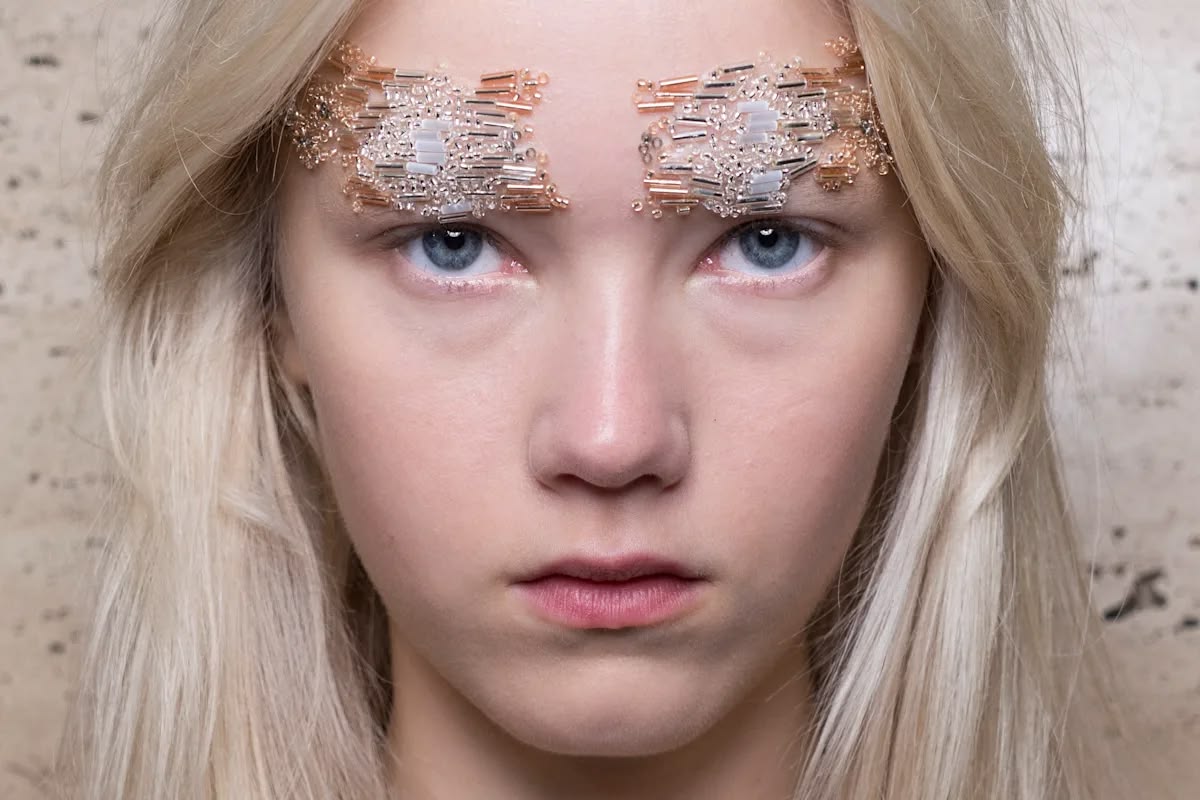
At Simone Rocha, the interruption is almost tender. Floral beaded brows appear in coloured and silver-toned treatments in the Spring/Summer 2027 show. The embellishment was selective; other faces carried different makeup. That distinction makes the gesture more compelling, not less. A collection does not need to turn every model into the same creature to establish a point of view. One strange detail can disturb an otherwise familiar face, redirecting attention without swallowing the person beneath it.
A beaded brow is not simply another way of decorating an eyebrow. It shifts the relationship between clothing and makeup. The brow work echoes the collection’s bugle beads: ornament travels from fabric to skin. Embroidery’s patience and physical presence enter a space usually reserved for a brushstroke. The result asks us to reconsider where an accessory begins. If a brooch can interrupt a lapel, why should the face be exempt from a similarly deliberate interruption? The interest lies in placement, not in pretending the ornament is natural.
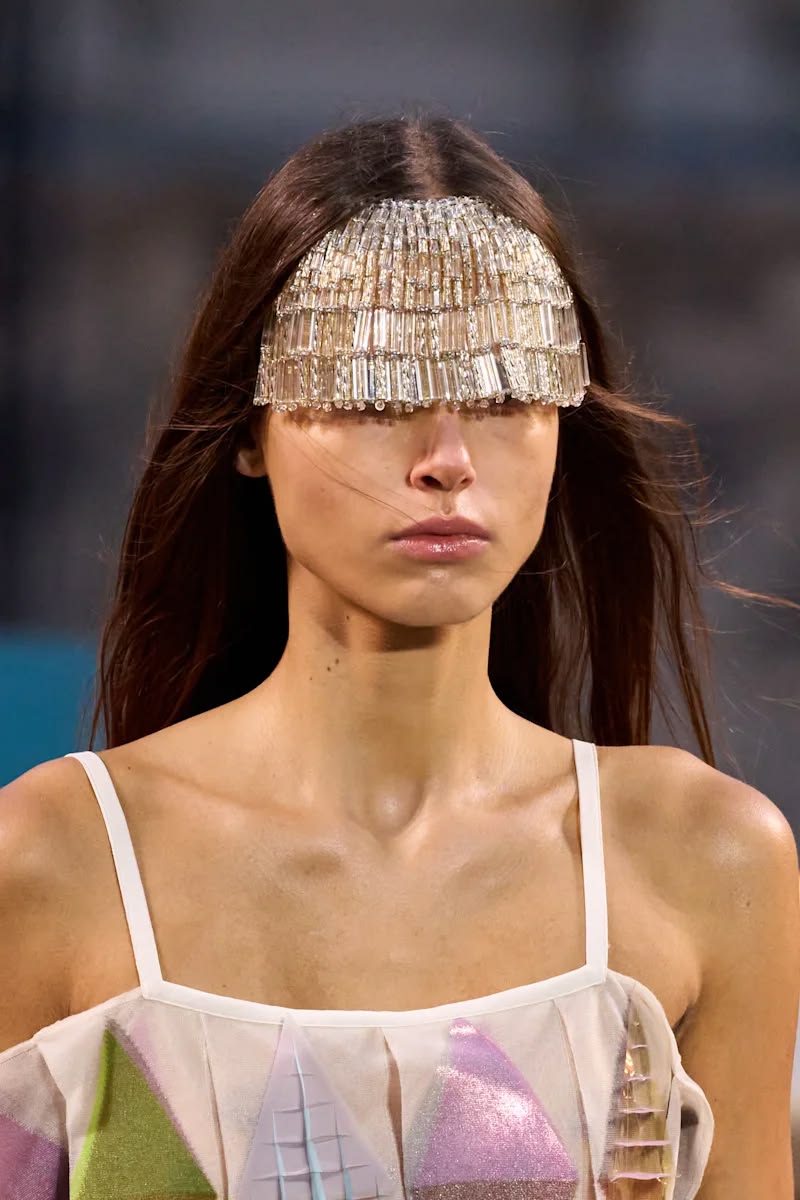
Louis Vuitton takes the idea further by covering the eyes entirely. A fringe of silver bugle beads falls from the hairline like bangs, ending exactly where a lash line should be. The effect is part headpiece, part makeup: the most expressive feature of the face is hidden behind jewellery, and yet the face reads as more decorated, not less. It is a deliberate refusal of the open, communicative eye that beauty imagery usually insists upon. Looking becomes a one-way transaction; the model can see out, but no one reads her. That reversal of the gaze is the most quietly radical gesture of the season.
“The face is not a flat page.”
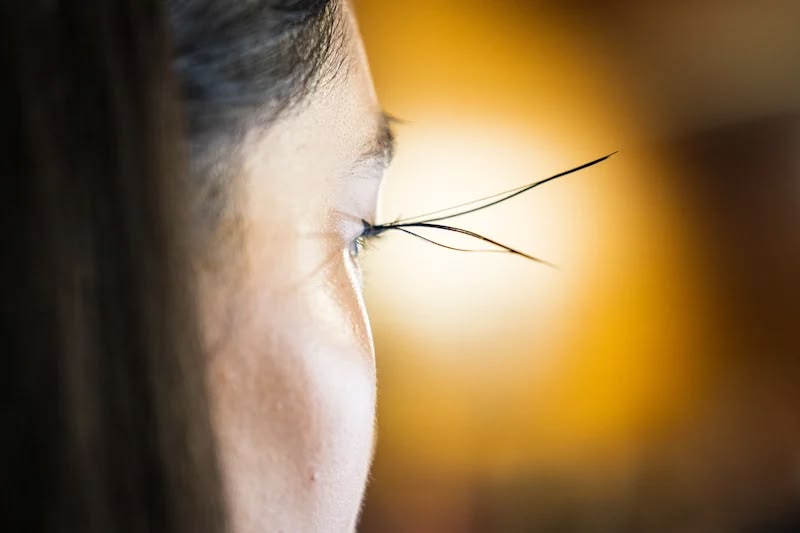
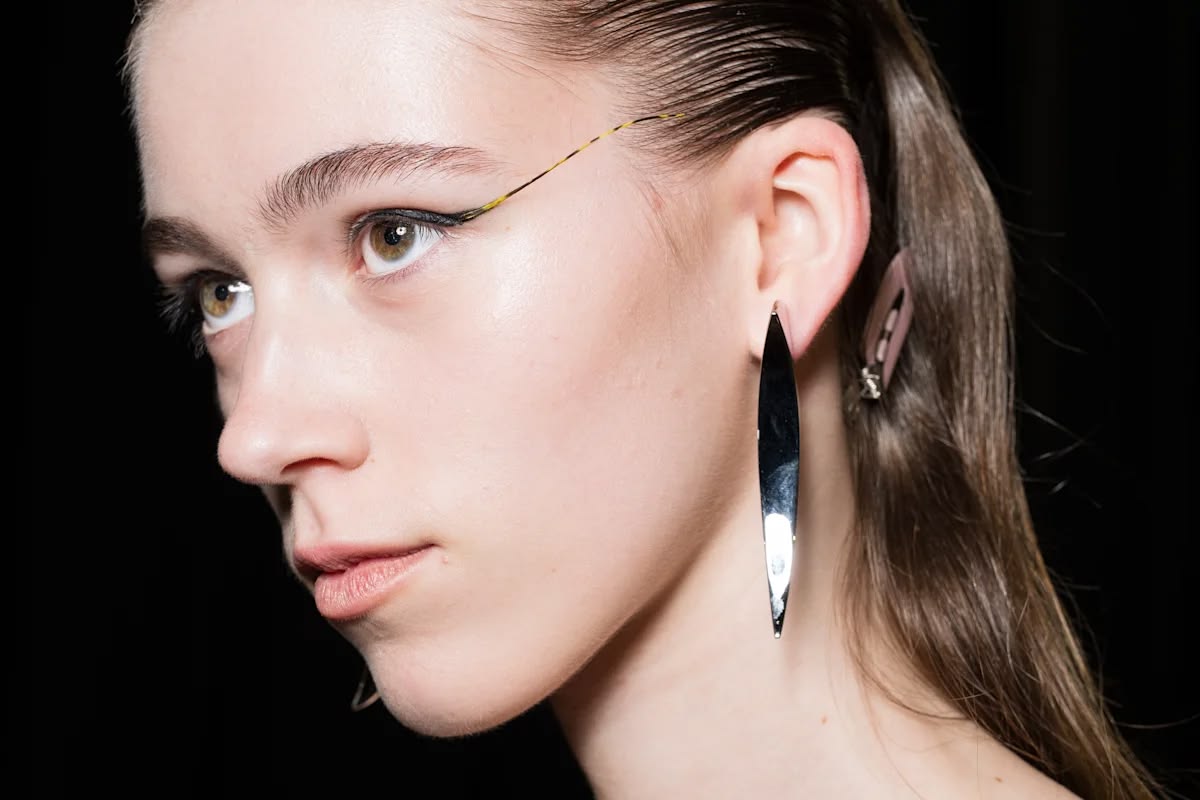
Mugler, by contrast, exposes the eye and then weaponises it. A single drawn line leaves the lid and travels clean toward the temple, less a wing than an incision. Up close, the lashes are built into long separated spikes that cast their own shadows, turning a blink into an event. Nothing about it pretends to be natural, and that honesty is the point. Where a soft smoky eye asks to be mistaken for bone structure, this line admits it was drawn by a hand with an opinion. The eye stops being a feature to enhance and becomes a line to extend.
Gucci’s The Store Show gives us graphic eyeliner, smoky eyes and lip colours that include intense black. Calling those dark elements gothic is a reading of their mood, not the house’s stated name for the entire makeup direction. The distinction protects the richer story. There is no reason to squeeze a varied cast of faces into one convenient trend label. What matters is the permission to sharpen, darken or exaggerate a feature without making every person submit to the same prescription.
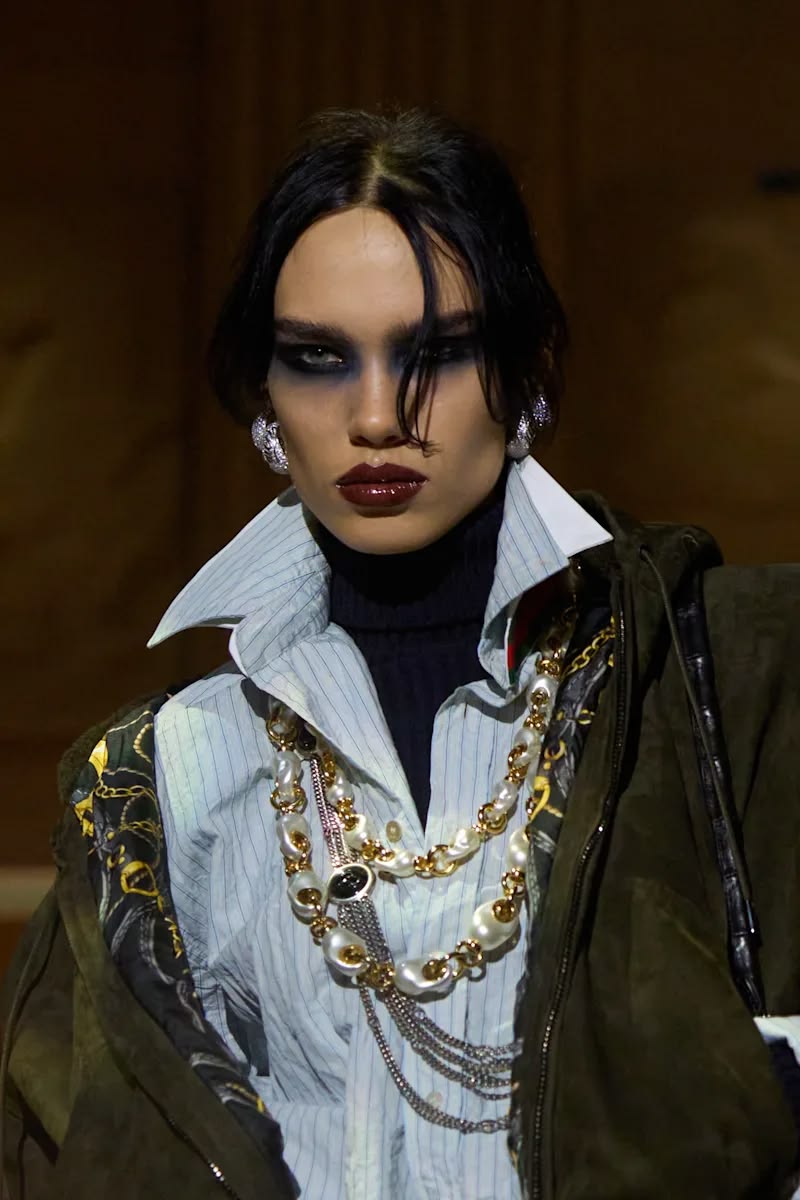
Black lipstick can make a face feel confrontational because it rejects the familiar promise that makeup should quietly improve what is already there. It announces a decision. Beside Rocha’s floral beads, Vuitton’s beaded veil and Mugler’s drawn wing, its drama suggests four different kinds of self-expression: embellishment, concealment, construction and graphic emphasis. None depends on the fiction that the wearer woke up looking this way. There is pleasure in an effect that admits it has been made. Artifice does not have to be dishonest; sometimes it is the most direct declaration of intention.
The temptation is to call this the end of clean beauty, or the return of weirdness after years of restraint. Runway evidence cannot support such a tidy verdict about everyone’s bathroom shelf. Nor should an expressive look become another obligation. A bare face is not a failure of imagination. The more useful shift is away from treating one polished, low-risk appearance as the universal definition of good taste. A bead, a flash of silver or a black mouth can expand the vocabulary without abolishing the quieter words.
The face is not a flat page. That is the thread worth carrying out of these shows. Its curves, expressions and changing light make every intervention unstable in the best sense: alive. Unconventional beauty becomes interesting when it responds to that life rather than masking it. Finally, the question is not whether we should all look stranger. It is whether makeup can once again leave room for a personal decision that is not immediately explained away as flattering, youthful or discreet. Some things deserve to be beautiful because they are unexpected.