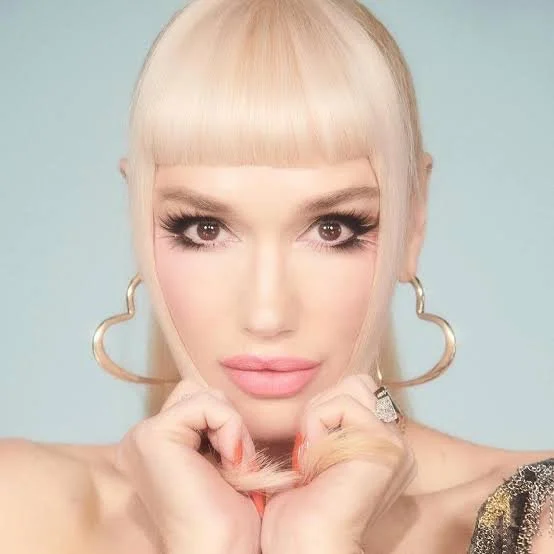
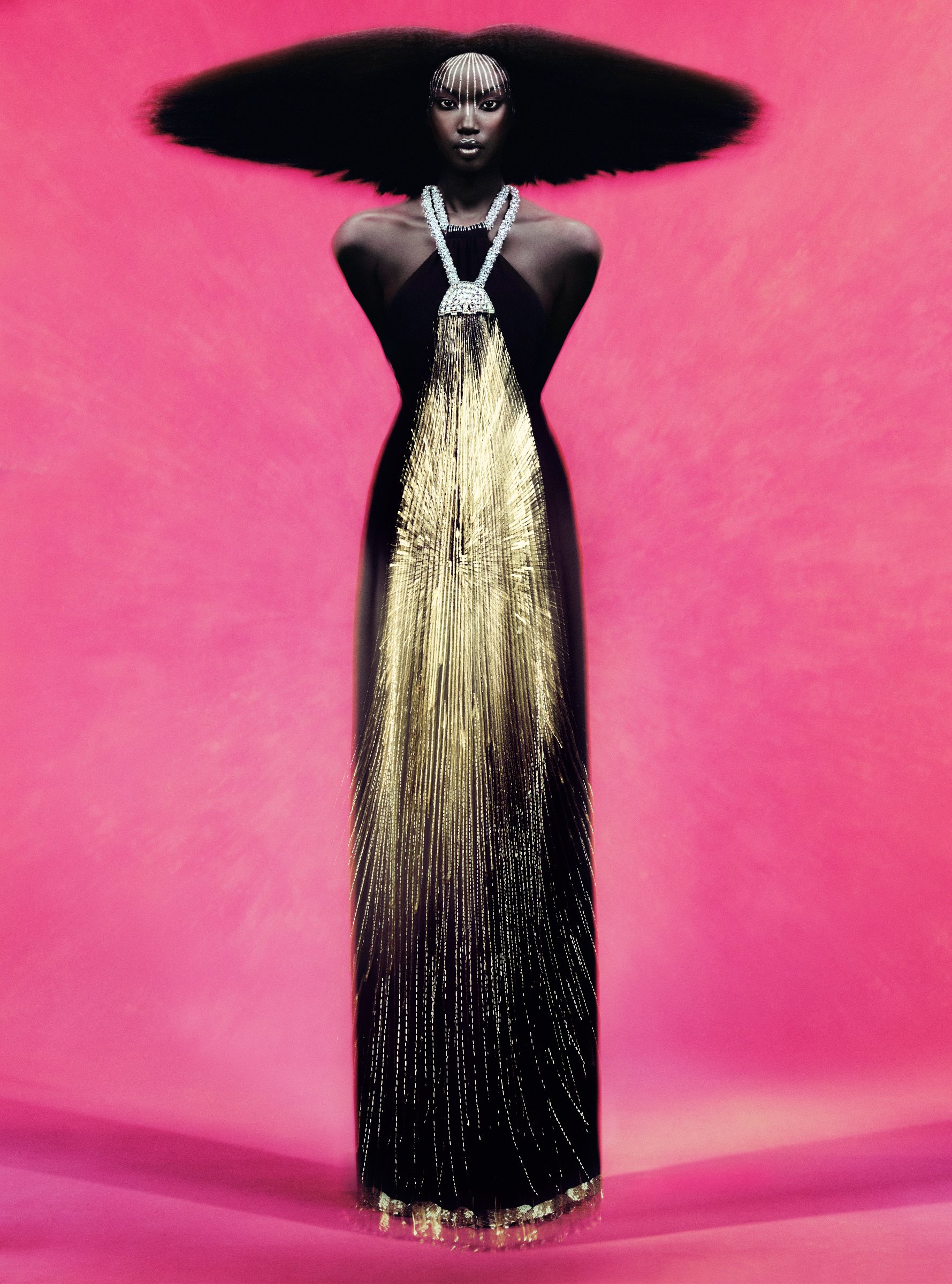
Rafael Pavarotti — Anok Yai in the Douche Dress, Chloé by Karl Lagerfeld (1983). Vogue US, May 2023. © Rafael Pavarotti. Image supplied on the Musée des Arts Décoratifs exhibition page.
A pink field, a silhouette stretched into ceremony, a gaze that refuses to soften: Rafael Pavarotti’s photograph of Anok Yai makes fashion look less like something to purchase than a power to inhabit. The dress is extraordinary, but it does not have the final word. The woman wearing it does.
At the Musée des Arts Décoratifs in Paris, Rafael Pavarotti: Photographer places that visual authority at the centre of the museum’s first presentation of his work in France. Running from 2 October 2026 to 2 May 2027, the exhibition brings fashion editorials, campaigns and portraits into dialogue with photographs from the museum’s collection. Curated by Sébastien Quéquet, with scenography by Pavarotti’s long-standing collaborator Ibby Njoya, it asks what happens when images made for circulation are given the space to hold our attention.
Colour is not decoration
It would be easy to reduce Pavarotti’s signature to saturation. That misses the emotional architecture beneath it. Born in Pará, Brazil, in 1993, he draws on the Amazonian environment of his childhood, the strong women in his family and the colourful objects belonging to his grandmother. In the museum’s account, those memories are not biographical footnotes. They are the material from which his pictures are built.
Colour has always been more than mere pigment to me. It is an ancestor, a rhythm, a spirit, a memory.
Rafael Pavarotti, quoted in the Musée des Arts Décoratifs exhibition press release.
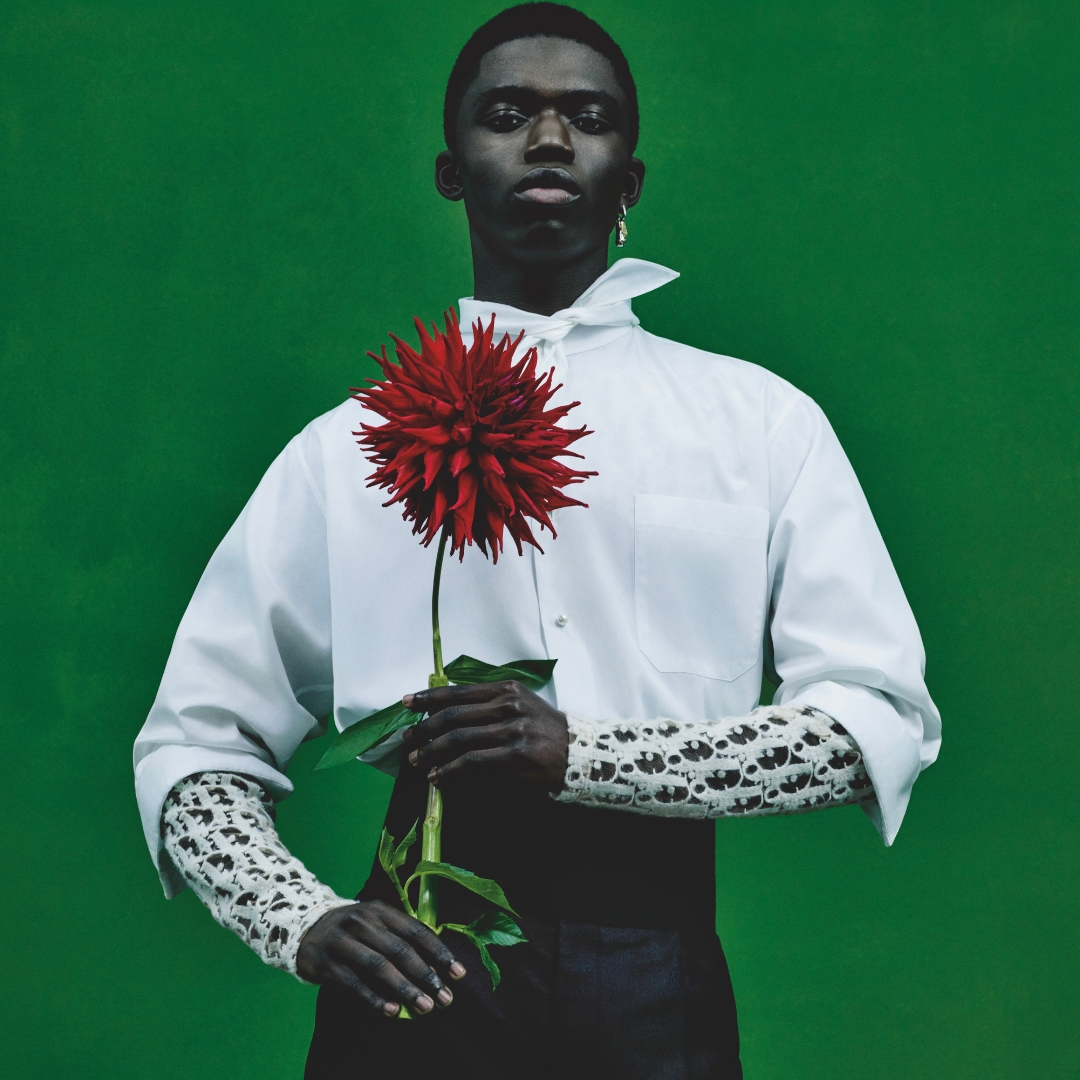
Look at the green surrounding Jeremiah Berko Fordjour in the Dior photograph: the white shirt becomes sculptural, the red flower a concentrated interruption. Nothing feels incidental. Colour establishes the terms on which we meet the subject. Rather than flattering the clothes into the background of a familiar world, Pavarotti constructs a world worthy of them—and of the person wearing them.
Who gets to look monumental?
Fashion has never lacked beautiful images. Its more difficult question is whom it permits to embody beauty, authority and possibility. The museum highlights Pavarotti’s Afro-Indigenous heritage and his commitment to making images in which younger generations can recognise themselves. His February 2022 British Vogue cover, As the World Turns, featuring nine Black models, is a defining part of that conversation.
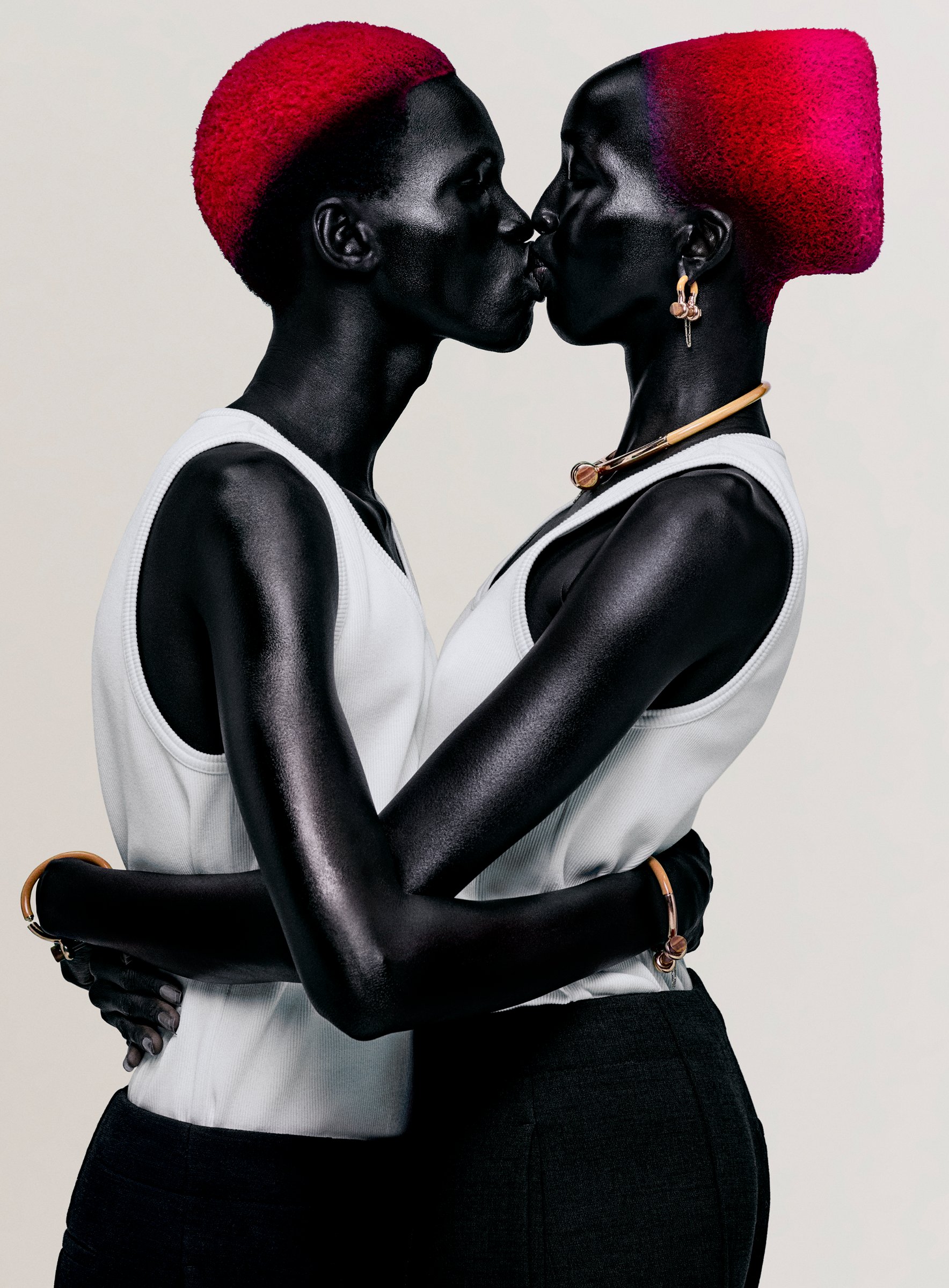
The distinction is between being included in an existing picture and changing the picture’s centre of gravity. Pavarotti’s subjects are not tentative arrivals. They take possession of the frame. The museum describes figures presented as empresses, goddesses, queens and warriors; the force lies not simply in theatrical styling, but in the refusal to make visibility look apologetic.
Beyond the instantly recognisable image
The museum’s press release describes a thematic journey through commissioned and personal work, with sketchbooks and magazine spreads revealing the creative process. Garments displayed on mannequins extend the conversation between clothing and its photographic transformation. That is the compelling reason to see fashion photography in a museum: the finished image can be understood as a decision, not merely an effect.
Pavarotti’s pictures arrive with the impact contemporary image culture demands, but their references resist its short memory. Family, place, collaboration and representation remain inside the polish. For COUTEUR, this is the exhibition’s strongest proposition: fashion imagery can be sumptuous without being empty. It can offer fantasy while still asking who that fantasy belongs to.
Plan your visit
Rafael Pavarotti: Photographer is on view at Musée des Arts Décoratifs, 107 rue de Rivoli, Paris, from 2 October 2026 to 2 May 2027. Curator: Sébastien Quéquet. Scenography: Ibby Njoya. Check the museum’s current admission information before visiting.
Official exhibition details · Visitor information and admission · Museum exhibition press release
Original COUTEUR commentary, based on the museum’s exhibition information and press release; not a first-person exhibition review. All photographs © Rafael Pavarotti, reproduced unchanged from the museum’s exhibition page.