EXHIBITED
THE BODY AS SCULPTURE
Ahead of the Legion of Honor retrospective, Alaïa’s clothes ask us to look at form from every side.
COUTEUR EDITORIAL
A dress occupies space even when it appears to cling to the body. Its seams direct attention, its fabric negotiates pressure, its edges decide where a silhouette begins and ends. To look at Azzedine Alaïa only through the shorthand of body-conscious dressing is to miss that architecture. The garment is not merely a flattering outline. It is a construction made in relation to a living form. The Body as Sculpture begins with that distinction: not a body turned into a static object, but clothing conceived through observation in the round.
Azzedine Alaïa: Sculpting Fashion opens at San Francisco’s Legion of Honor on November 21, 2026, and runs through April 11, 2027. The Fine Arts Museums of San Francisco describe it as the first major United States retrospective devoted to the Tunisian-born, Paris-based couturier. The museum announces garments across his career alongside pieces from his historical collections. This is a forthcoming exhibition, not an installation we can claim to have walked through. Its documented premise nevertheless offers an unusually exact way to consider where fashion and sculpture meet.
For Alaïa, sculpture was not a flattering comparison invented after the clothes became famous. According to the museum’s account, he entered the École des Beaux-Arts in Tunis at fifteen and studied the discipline there. Learning anatomy and shape formed part of his education. The relationship to sewing was not a clean break between two separate lives: his sister Hafida taught him to sew to help pay tuition, and he assisted the seamstress Madame Richard. Looking at the body and making clothing developed in proximity, each giving the other something concrete to work with.
The Fondation Azzedine Alaïa records his recollection that sculpture students were taught to turn around the model. It is a deceptively simple instruction. A silhouette seen from the front can conceal an unresolved back; a successful photograph can flatter a construction that does not convince from the side. To work around a model is to refuse that shortcut. It asks the maker to account for continuity. In this sense, the sculptural quality of Alaïa’s clothing belongs as much to a method of looking as to any dramatic effect in the finished dress.
“Clothing is sculpture that must answer to a body.”
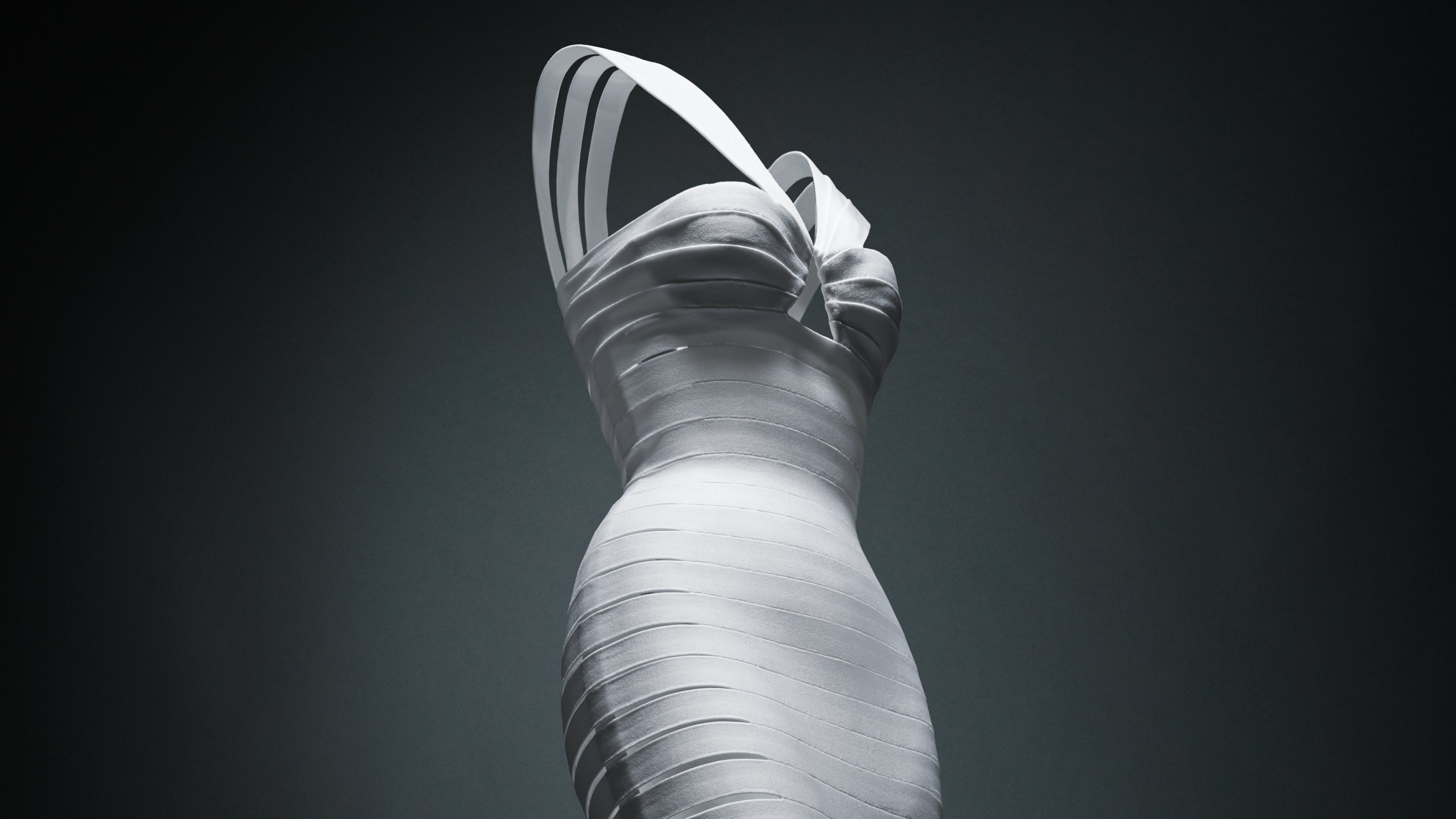
Consider the publicity photograph of a Spring/Summer 1990 Haute Couture dress, identified by the museum as viscose, polyamide and elastane. The material description is not incidental. A stretch fabric introduces a particular relationship between garment and body, one that cannot be explained entirely by comparing a dress to carved stone. The design belongs to an encounter between cut and material. Calling it sculpture should make us more attentive to that encounter, not encourage us to replace the technical facts with a vague compliment about timeless beauty.
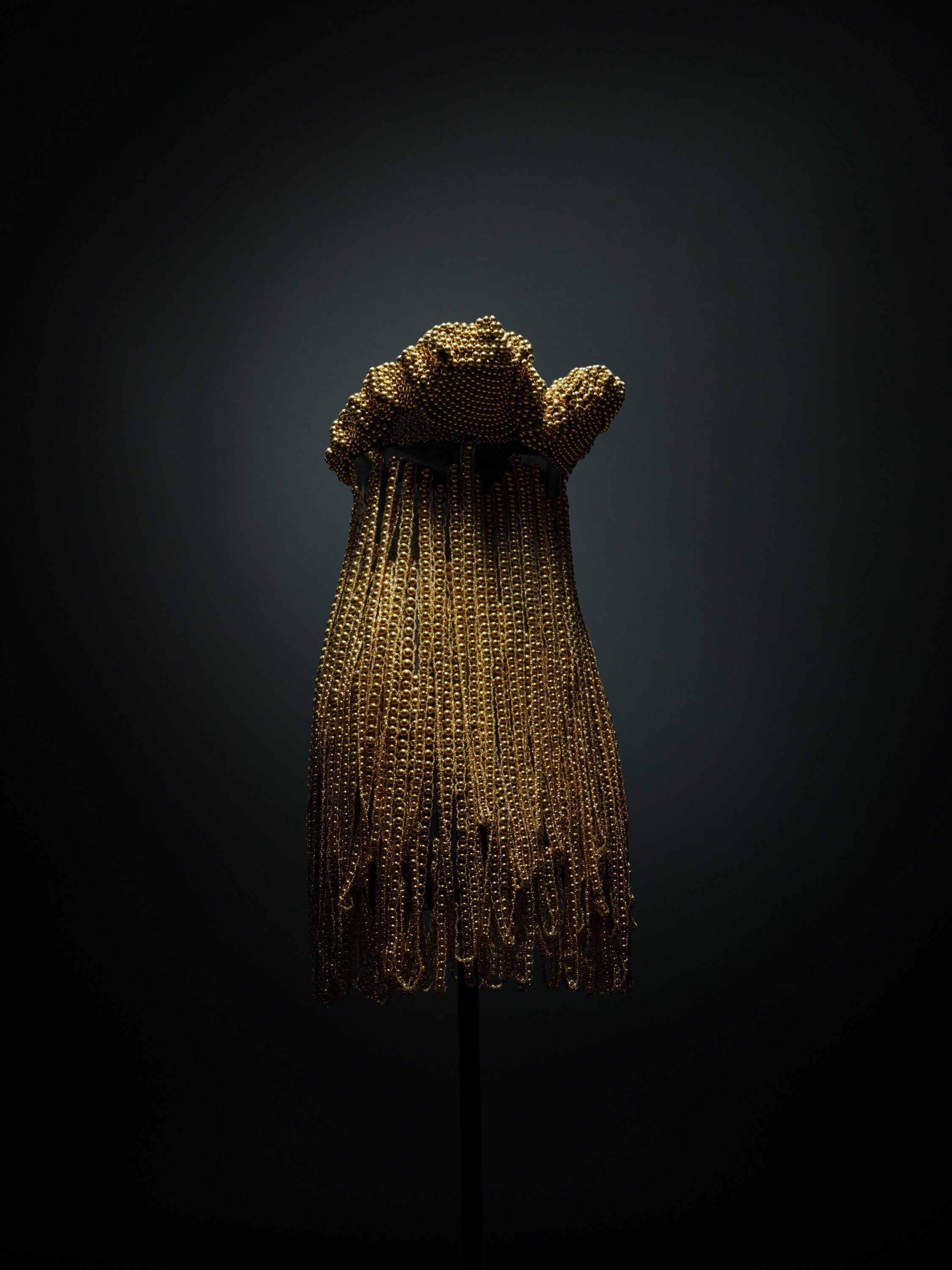
A second documented garment takes us elsewhere: a Spring/Summer 1989 Haute Couture dress in silk organza and gold-tone steel beads. The museum’s caption connects it to Tina Turner’s Paris photo shoot with Peter Lindbergh in 1989. Organza and metal are a different proposition from an elastic textile. Their presence reminds us that Alaïa’s command of form cannot be reduced to one fabric or one familiar reputation. The photograph of the garment is also not the Lindbergh photograph of Turner; accurate captions keep the object, its wearer and its photographic history distinct.
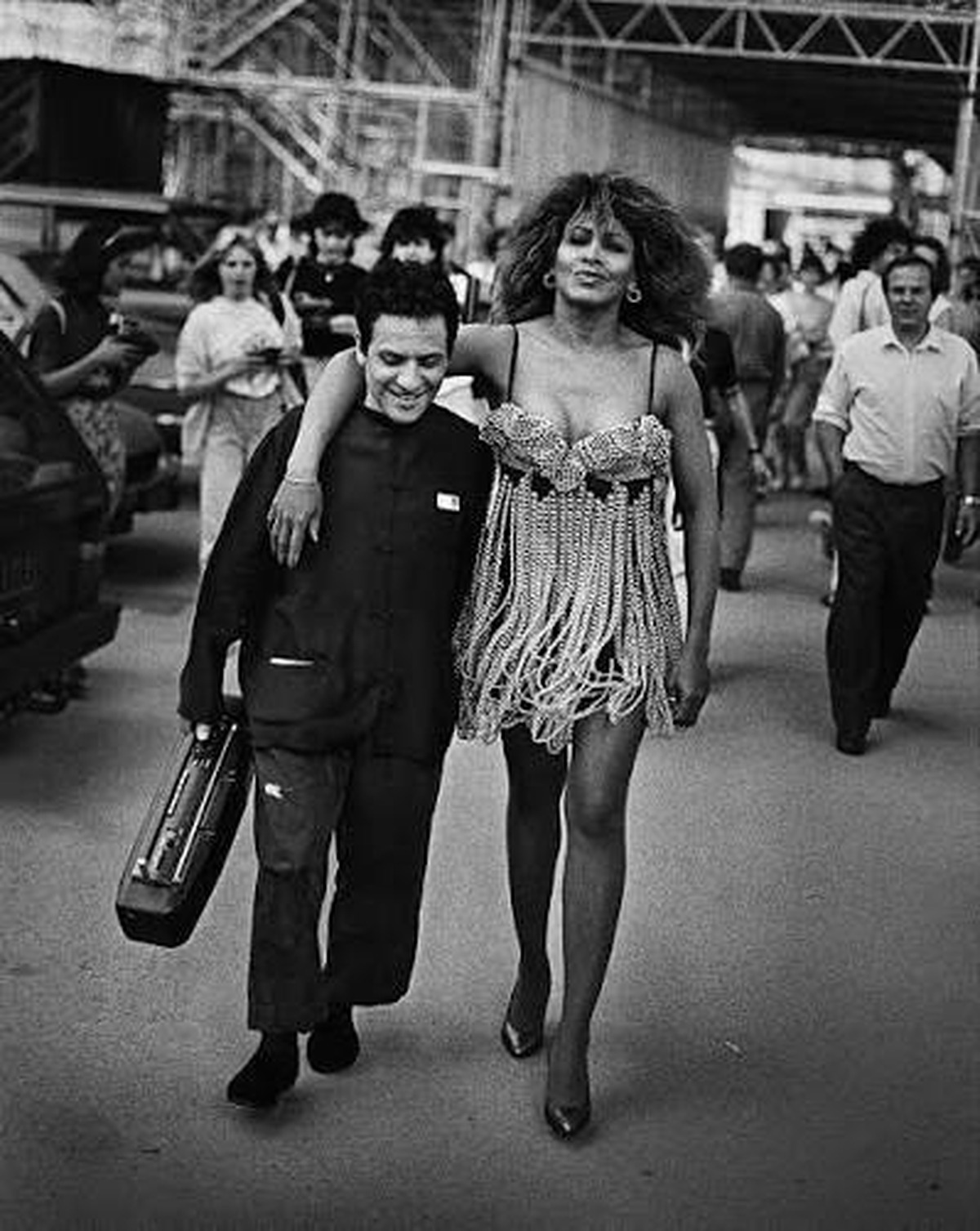
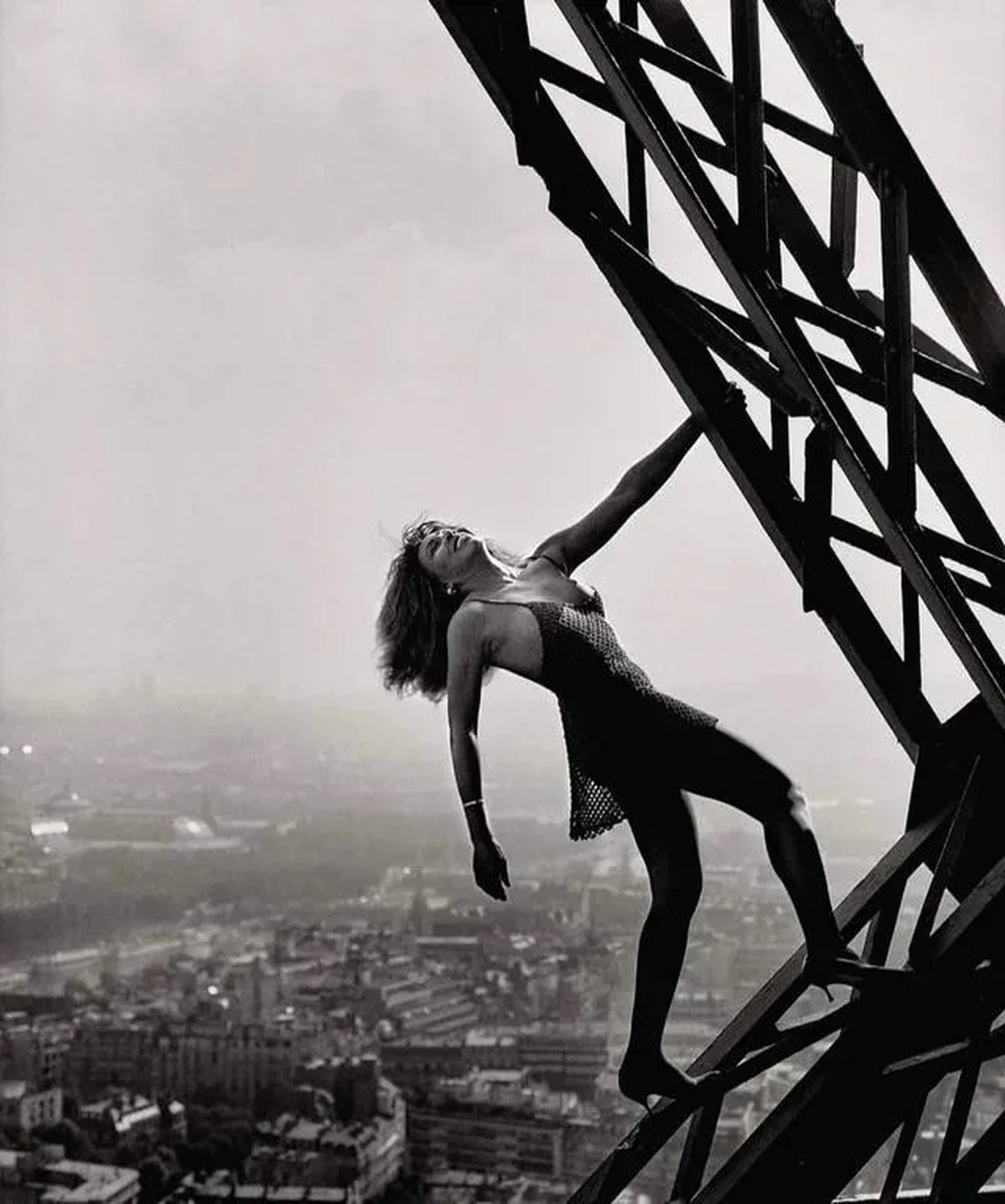
Clothing is sculpture that must answer to a body. The phrase is an editorial interpretation, not an attributed quotation, and its final clause is crucial. A dress cannot rely solely on its appearance on a stand. Pattern, assembly and fitting connect its visual idea to the person who wears it. The Fondation’s accounts of Alaïa’s practice emphasise that command of conception and making; the museum characterises his commitment as extending from pattern-making through cutting and fitting. Such institutional descriptions illuminate his involvement without requiring the implausible claim that no other hands ever worked in the atelier.
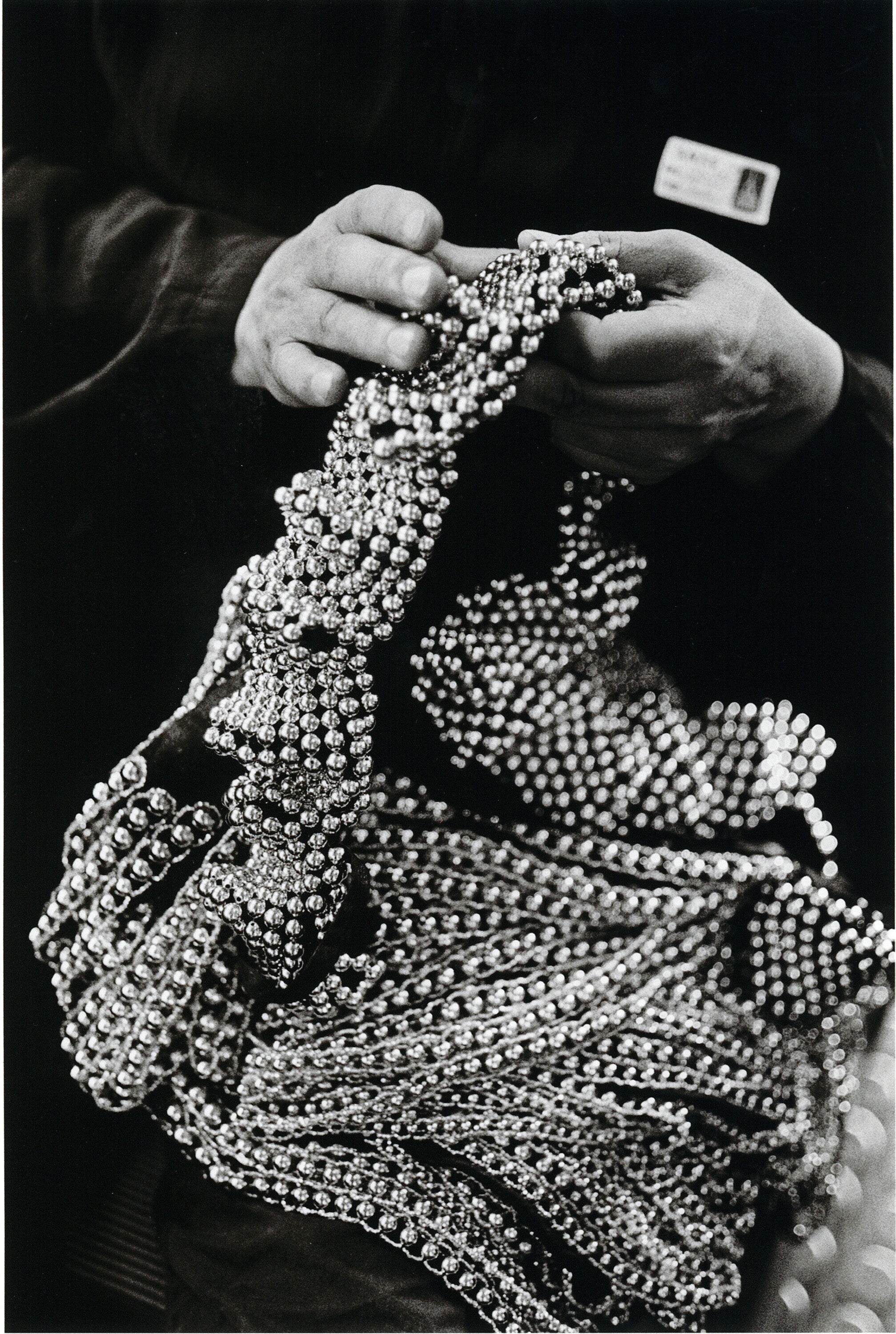
His relationship to time belongs to the same argument. The museum describes a designer who presented collections when ready rather than submitting to the traditional fashion calendar. That fact is often polished into a romantic image of the solitary genius. A more useful reading is practical: an exacting construction requires the time its maker believes it needs. The refusal of a deadline has meaning because it is attached to a process, not because lateness itself is admirable. Time becomes one of the conditions under which a garment can be resolved.
The historical clothes he collected offer another route into that process. The museum describes them as sources of inspiration and technical understanding; its exhibition material names Cristóbal Balenciaga, Elsa Schiaparelli and Madeleine Vionnet among the historical designers represented. Their presence should not be treated as a decorative family tree. A collection of clothes can function as a working library of solutions: how material is organised, how a shape is sustained, how a seam makes something possible. Looking backward can sharpen a maker’s independence rather than diminish it.
That distinction is especially interesting for COUTEUR readers already familiar with Schiaparelli’s fashion-as-art conversation. Surrealist disruption and Alaïa’s attention to construction do not need to be forced into a contest. Each expands what clothing can ask of the eye. The museum’s forthcoming retrospective gives us a reason to move beyond the question of whether a dress deserves to stand beside sculpture in a gallery. The more compelling question is what we learn when we examine the dress with sculpture’s demand for spatial attention and fashion’s demand for embodied use.
The institution also identifies designs worn by Grace Jones and Rihanna, alongside Turner. Those names establish a documented relationship with formidable public figures; they are not a licence to invent memories of particular performances or fittings. The clothes deserve a reading that can hold charisma and technique together without substituting celebrity for observation. Alaïa’s exceptional understanding of the human form becomes more persuasive, not less, when we speak precisely about materials, construction and the evidence actually available to us.
At the Legion of Honor, the exhibition promises an opportunity to look slowly at a practice too often compressed into a nickname. Before the doors open, the most responsible anticipation is neither a review nor a claim about an installation’s effect. It is an invitation to look differently. Move around the form. Ask what the material is doing. Notice the decisions that make a surface seem inevitable. The achievement of Alaïa’s clothes is not that they escape fashion to become art. It is that making clothing, pursued with this degree of attention, can change how we understand form itself.

Exhibited / EDITORIAL STUDY
THE BODY AS SCULPTURE
A dress occupies space even when it appears to cling to the body. Its seams direct attention, its fabric negotiates pressure, its edges decide where a silhouette begins and ends. To look at Azzedine Alaïa only through the shorthand of body-conscious dressing is to miss that architecture. The garment is not merely a flattering outline. It is a construction made in relation to a living form. The Body as Sculpture begins with that distinction: not a body turned into a static object, but clothing conceived through observation in the round.